Picture this. It’s a Sunday night in Chrompet. Your child has been a little fussy all day, but you assume it’s teething or tiredness. Around 11 p.m., the crying starts for real. They refuse to eat, push your hand away when you try to touch their mouth, and now everyone at home is tense and exhausted. By Monday morning, you’re frantically searching for a children’s dentist in Chrompet.
This is how most first dental visits happen.
For years, parents here have grown up with the idea that you “go to the dentist only when there is pain.” So the thought of taking a one-year-old for a dental check-up feels strange, almost like overdoing it. But dentistry has changed. Our food, lifestyle and habits have changed. Children’s risk factors have changed. The advice has changed, too.
Across the world, and increasingly in India, dentists now suggest this simple rule:
Your child should see a dentist by their first birthday or within six months of their first tooth appearing.
At first, it sounds early. Once you understand the logic behind it, it starts to feel like common sense. So let’s see why we have to see a children’s dentist in Chrompet
When Is the “Right” Time for a First Visit?
You don’t have to overthink it.
If your baby has got their first tiny tooth, the countdown has started.
If the first birthday is coming up and you haven’t booked a check-up yet, that’s your cue.
It doesn’t matter whether your child has two teeth or ten. The idea is not to wait until the mouth is full of teeth and problems. It’s to start a little earlier, when things are still easy to guide and correct.
Why Bother So Early?
Here’s the honest answer: because problems don’t wait for school age.
We see babies from Chrompet, Pallavaram, Tambaram, and even farther parts of Chennai with cavities that had formed long before parents noticed anything wrong. By the time a dark spot becomes visible, the damage has often already moved deeper.
An early visit does three big things.
It catches trouble before it explodes.
A trained eye can spot issues that don’t look like much to a parent.
Very faint white lines near the gumline, a bit of roughness on the surface, irritated gums – these may be the first signs of decay or enamel weakness. Early bottle-feeding patterns, constant night feeding, sugary liquids in sippers, and even some medicines can quietly start affecting baby teeth.
If we see these patterns early, small changes at home can prevent big procedures later.
It gives parents clarity, not fear.
Modern parents are flooded with advice. One person says, “Avoid fluoride,” another says,, Only fluoride works.” One blog tells you to brush from day one, another says to start at age three. It’s confusing, and you shouldn’t have to guess.
During that first dental visit, most of the time is actually spent talking to you:
- How to clean your baby’s mouth before and after teeth appear
- What kind of brush and how much paste to use
- Whether night feeding is okay in your child’s specific situation
- How often is “too often” when it comes to sweets and snacks
- When to move from bottle to cup
- How long is thumb sucking or pacifier use safe
Once you hear it from someone who works with children’s teeth every day, your decisions at home become much simpler.
It makes the dentist a familiar face, not a scary one.
Imagine the difference between these two first memories:
- “I went to the dentist when my tooth was hurting so much I couldn’t sleep.”
- “I went to the dentist, they counted my teeth and showed me how to brush, and then I got a sticker.”
Both are real stories we hear. The second child sits in the dental chair years later with far less fear. Taking your child early, when there is no emergency, turns the clinic into a normal place instead of a last-resort solution.
“But Baby Teeth Fall Out Anyway. Does It Really Matter?”
This is probably the most common question we hear from parents in Chrompet.
Yes, baby teeth will eventually fall out. But until then, they’re doing a lot of important work. They help your child:
- Bite and chew food properly.
- Learn to pronounce words clearly.
- Guide the jaw as it grows.
- Hold space for the permanent teeth waiting underneath.
If baby teeth decay or are removed too early, the neighbouring teeth drift into that empty space. When permanent teeth finally arrive, they don’t have enough room. That’s when you start hearing about crowding, crooked teeth, extractions, and braces.
So, taking care of baby teeth is not about perfection. It’s about making sure they last long enough to do their job properly.
When Should You Not Wait Until Age One?
The “age one” rule is for children who seem perfectly fine. But there are a few signs that mean you should come in sooner:
- Any white, brown or black spots on the teeth
- A tooth that looks chipped or different from the others
- Strong, persistent bad breath in a small child
- Your child avoids chewing on one side or refuses harder foods.
- Mouth always slightly open, snoring or noisy breathing during sleep
- Thumb sucking or pacifier use that you feel you cannot phase out.
None of these automatically means there is a serious problem. They simply mean it’s safer to let a children’s dentist take a look instead of ignoring them.
What Does a First Visit to a Child-Friendly Clinic Look Like?
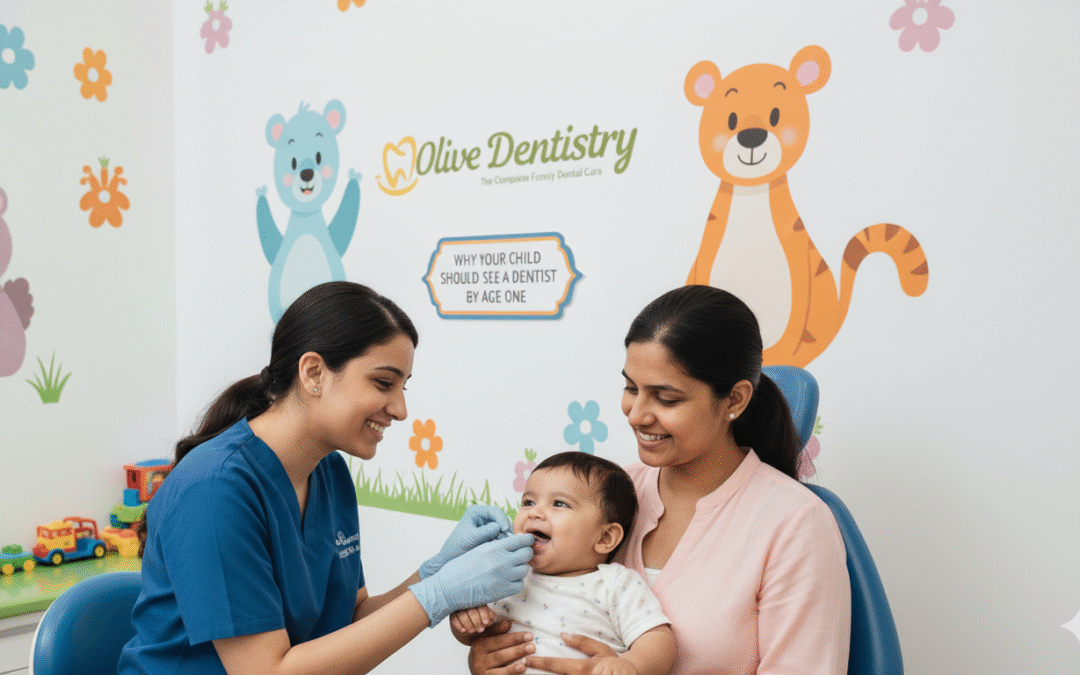
Parents often imagine bright lights, sharp instruments and crying. In reality, a first visit for a one-year-old is usually quiet and simple.
In a child-friendly clinic in Chrompet, it typically goes like this:
- You talk first; we listen. We ask about feeding, brushing, habits and general health.
- Your child may sit on your lap. There is no rush to separate them.
- We gently check the teeth, gums, tongue and bite. This takes only a few minutes.
- If needed, we show you how to brush or clean in a way your child will accept more easily.
- You get clear, written or verbal guidance on what to do next and when to return.
Most children leave without any procedure done at all. And that’s the best-case scenario.
What You Can Do After That First Appointment
Once you’ve made that first visit, the rest becomes manageable. Most children’s dentist in Chrompet will recommend that you:
- Brush your child’s teeth twice a day with a very small amount of the right toothpaste.
- Offer water after milk feeds whenever possible, especially at night.
- Keep sweets and sticky snacks occasional, not every day.
- Let your child chew age-appropriate solid foods so the jaws get proper exercise.
- Bring them back roughly every six months for a quick check-up.
You don’t have to be perfect. You just have to be aware and consistent.
A Final Word to Parents in Chrompet
If you have a little one at home who has just cut their first tooth, or a toddler whose birthday cake was recently cut, you are at the perfect starting point.
A first dental visit by age one doesn’t mean your child has a problem. It means you are choosing not to wait for one.
Whether you visit us at Olive Dentistry in Chrompet or another children’s dentist in Chrompet, booking that first appointment is a small step now that can save your child discomfort and your family stress in the years to come. Book an appointment